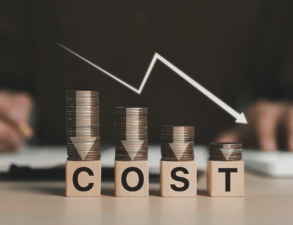
In financial decision-making, every choice has a cost because economics posits that everything has a cost. Economic thinking can be understood as cost-based thinking; simply put, there's no such thing as a free lunch. Even the air we breathe every day, in a different context, incurs a cost. Economics arose because we face scarcity in this world. We cannot possess everything we want; we must make choices and trade-offs. Economics teaches us how to make choices, while also requiring us to make corresponding sacrifices.
Every financial choice has a cost, stemming from the fundamental principle of economics—opportunity cost. Opportunity cost refers to the loss of the greatest value among other options forgone in order to choose a particular solution. In financial decision-making, resources (such as funds, time, and manpower) are finite; choosing one use inevitably means forgiving others, thus every choice implicitly carries a cost.
Every choice we make carries a cost.
In our daily lives, we constantly make various choices. These choices not only shape our lifestyles but also determine our future direction. Each choice is accompanied by certain costs, which may be explicit, such as money and time, or implicit, such as opportunity cost and emotional investment. Here is a detailed analysis of the costs behind choices:
Explicit Costs:
Explicit costs are those we can directly measure and calculate. For example, the money we pay when choosing to buy a product is an explicit cost. Similarly, the tuition and time spent choosing to attend a training course are explicit costs. These costs are clearly perceived when making a choice.
Implicit Costs:
Implicit costs are less easily perceived, but they are equally important. Opportunity cost is a type of implicit cost; it refers to the maximum value of something else we give up to obtain something else. For example, when we choose to settle in a city, we give up development opportunities that might be available in other cities. Furthermore, emotional investment is also an implicit cost. When we choose to build close relationships with others, we need to invest a significant amount of time and energy to maintain these relationships. While these investments cannot be measured in monetary terms, they are also costs behind our choices.
Sunk Costs:
Sunk costs are costs that have already been incurred and cannot be recovered. These costs often become a psychological burden during the decision-making process, affecting our ability to make informed choices. For example, in psychological counseling, if the counselor cannot empathize with our choices, we may feel disappointed and anxious because of the time and money we have already invested. This disappointment and anxiety can drive us to continue investing more resources in an attempt to recoup the lost costs, thus falling into the sunk cost trap.
The Role of Decision-Making Costs
In business management, some costs can be reflected in financial statements and can be called tangible costs; others are not reflected in financial statements and can be called intangible costs. Through years of consulting with businesses, we have found that there is a visible hand and an invisible hand in total cost. Total cost is determined by the visible hand, but even more so by the invisible hand. The power of these intangible costs is far greater than that of tangible costs, influencing both tangible costs and financial statements.
Within this invisible hand, decision-making costs are the most important part of intangible costs; one could say that decision-making costs are the biggest cost for a company. We try every means to save on materials, reduce auxiliary materials, decrease labor, and control various expenses, but the sum of the results of controlling these costs and expenses is sometimes far less than the loss from a single wrong decision.

Basic Concepts of Financial Cost Management
What is Financial Cost Management?
Financial cost management refers to a company's efforts to plan, control, analyze, and optimize costs to achieve efficient resource utilization and maximize profits. It's not just about "saving money," but about improving the overall operational efficiency of the company through scientific methods.
Core Objectives of Financial Cost Management
- Cost Control: Ensuring the company does not overspend during operations.
- Resource Optimization: Rationally allocating resources and avoiding waste.
- Profit Enhancement: Increasing the company's net profit by reducing costs or improving efficiency.
Common Tools for Financial Cost Management
- Budget Management: Developing detailed budget plans and monitoring actual expenditures.
- Cost Analysis: Identifying high-cost areas through data analysis.
- Performance Evaluation: Evaluating the cost control effectiveness of each department.
Conclusion
Economic thinking can be understood as cost thinking. Simply put, economics believes that everything has a cost; there is no such thing as a free lunch. Everyone likes a free lunch! After all, we all want to pay the minimum cost and get the maximum benefit. But nothing in this world is completely free. Even the air we breathe every day comes at a cost in a different context. For example, if you feel short of breath while climbing Mount Everest, air becomes a scarce commodity, and you need to spend money to buy oxygen. Therefore, economics exists because we face scarcity in this world. Scarcity means that the sum of everyone's needs exceeds the existing amount of resources. We cannot have everything we want; economics teaches us how to make choices and sacrifices.